One rider worked out how electric bicycles are actually sized, then wrote down the measurements, the geometry numbers and the shop questions that turned out to matter. Free to read, nothing for sale.
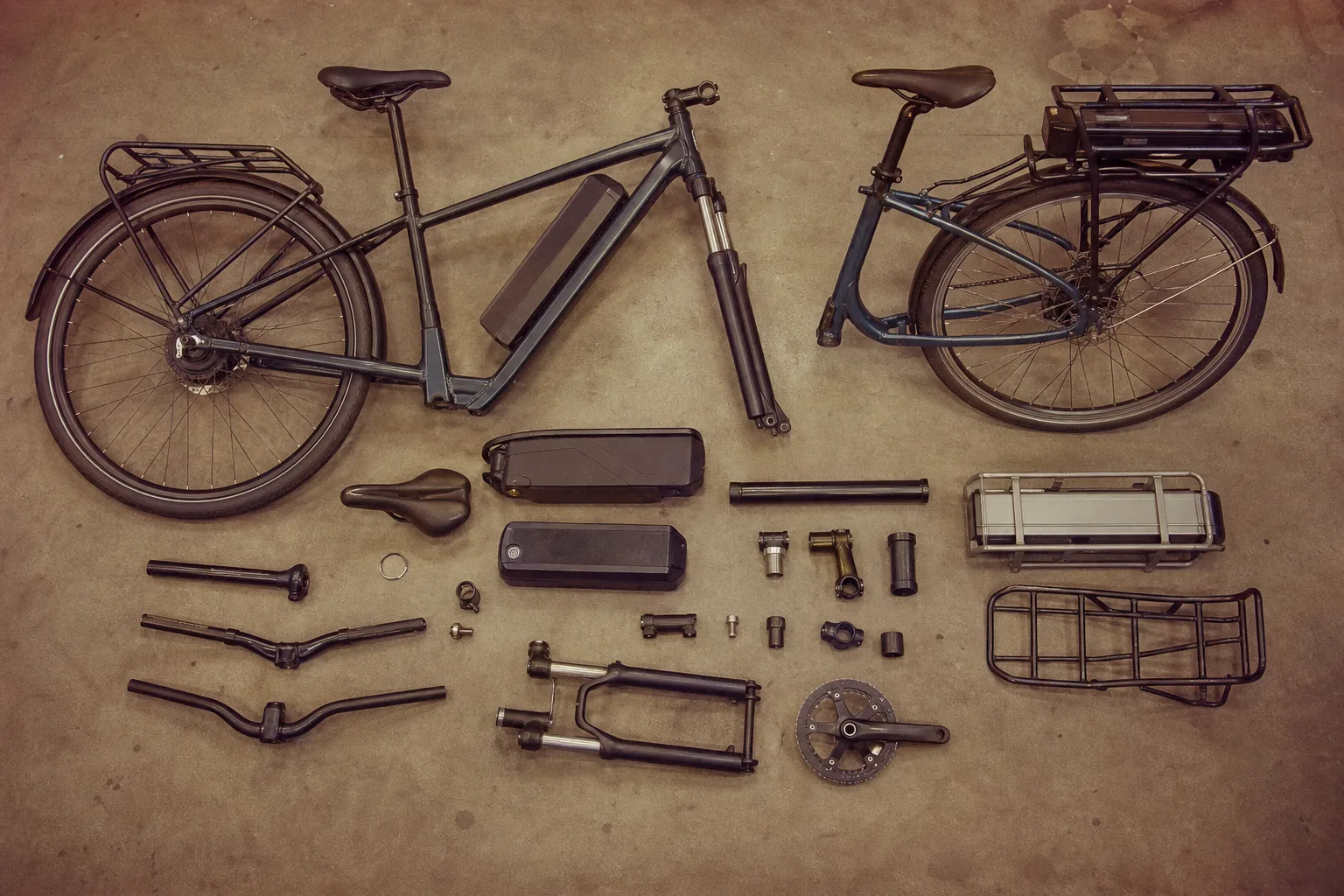
Two electric bikes can both read 55 pounds on the shop scale and behave nothing alike the moment the motor stops helping. One carries its battery low in the downtube and its motor at the bottom bracket, so the mass sits between the wheels and close to the ground; the other carries a rack battery over the back wheel and a hub motor inside it, so more than half the weight lives behind the seat tube. At a curb, on a hitch rack, in an apartment elevator, those two bikes ask different things of you, and the spec sheet number that supposedly describes both is the least useful figure in the comparison.
The curb test, and what actually gets lifted
Lifting a bike over a curb is not lifting 55 pounds. It is lifting whatever fraction of 55 pounds sits on the wheel you are raising, with your hand somewhere on the bars or the top tube, which means leverage decides the effort more than the total does. A mid-drive bike with an integrated downtube battery divides its load fairly evenly, so the front end comes up with maybe twenty pounds of resistance and stays where you put it. The rear-hub, rack-battery bike puts less on the front wheel, which lifts easily, then plants nearly forty pounds behind you when you try to pivot it up and forward.
The careful check is simple and takes ten seconds in the shop. Stand beside the bike, grip the bars in one hand and the seat tube or top tube in the other, and lift the front wheel four inches, then the rear wheel four inches, then the whole bike straight up by the down tube. Note which of those three felt worst, because that is the one your daily route will demand. A bike that lifts well by the front but not by the frame is a bad match for anyone with a stoop or a step.
Racks, elevators and the geometry of tight spaces
A hitch rack with a per-bike limit around 60 pounds seems to accommodate anything in the 45 to 65 range, but the limit is not the only constraint; the wheel trays, the arm clamp and the height of the lift matter more in practice. Loading means raising the bike roughly thigh-height, holding it there while the arm swings over, and doing it without the mass swinging away from you. Rear-heavy bikes swing. A downtube-battery bike loads more like a heavy analog bike, which is to say awkward but predictable, and the Consumer Product Safety Commission oversees the product safety side of bicycles and e-bikes sold here, so rack and battery labeling is worth reading rather than skimming.
Elevators change the question again. In a cab with a four by five foot floor, what matters is the bike's footprint and whether it will stand on its own without the kickstand collapsing under a rear-loaded frame. A step-through with a low standover and a center-mounted battery can be tipped up on its rear wheel and stood nearly vertical against a wall, taking two square feet. A long-tail or rack-battery bike often cannot be tipped up at all without the battery wanting to lever itself out of your hands.
Wheeling it backwards up a step
The move most people underestimate is walking a bike backwards up two or three steps into a building. You stand above it, pull the bars toward you, and let the rear wheel roll up the riser while your arms carry whatever the wheel is not supporting. Front-heavy or center-heavy bikes do this well because the load stays near your hands. Rear-heavy bikes make you drag the mass over each edge, and by the third step your lower back knows the difference. If the battery comes off in five seconds and weighs seven or eight pounds, that removal changes the balance more than it changes the total.
What to check before you buy
Weigh the bike yourself, with the battery in, on a bathroom scale you have carried into the store, and then weigh it again with the battery out so you know both numbers rather than the marketing one. Ask where the balance point is by lifting at the bottom bracket. Ask whether the battery keys out from above or slides from the side, since a side-slide battery cannot be removed with the bike against a wall. Then take the shop's demo bike to the nearest curb and do the whole sequence once.