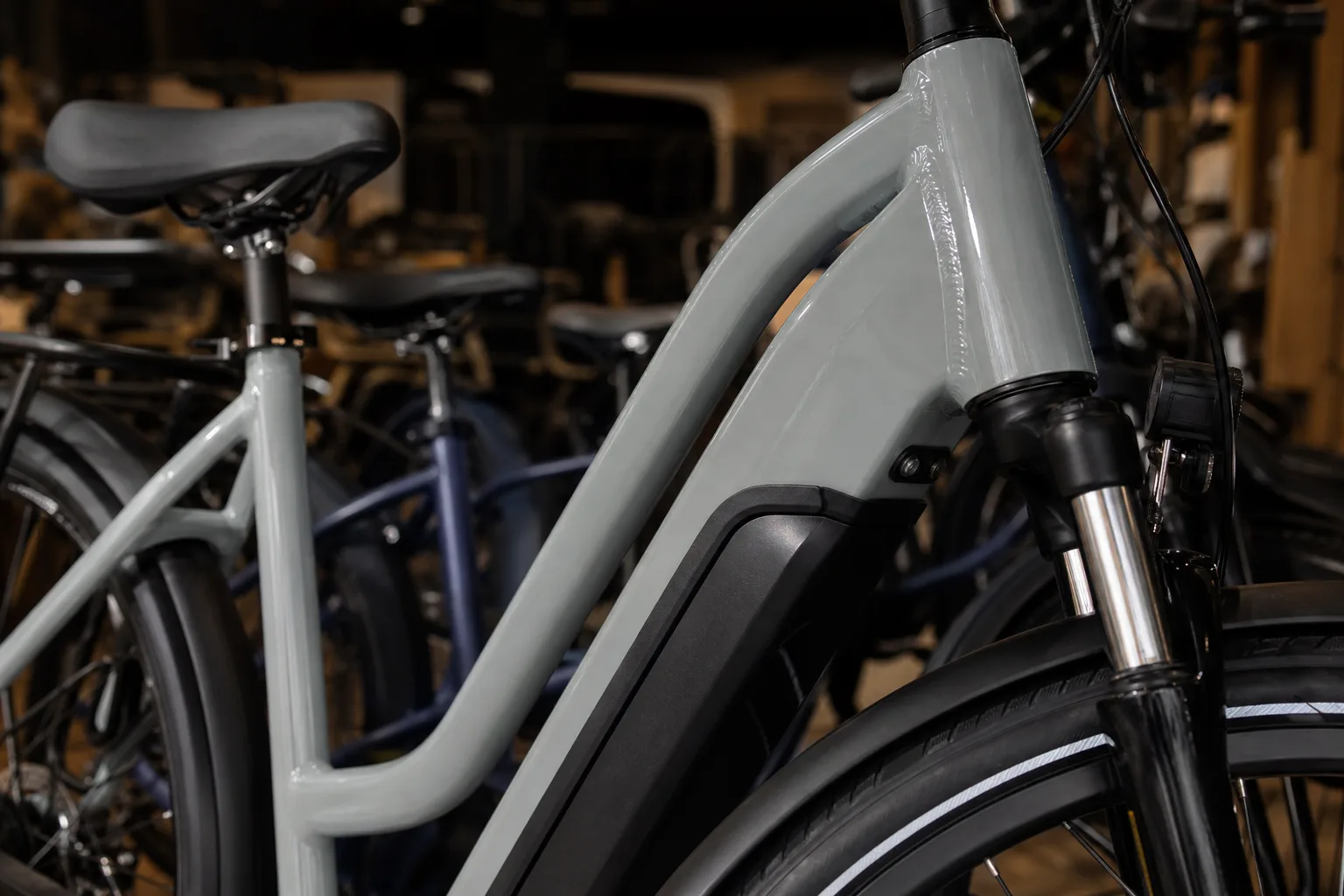
Two electric bikes sit on the same shop floor, same motor, same battery, same 27.5-inch wheels, and one is tagged for women and one is not. The difference between them is rarely a single dramatic thing. It is usually a lower top tube, a slightly shorter reach, a narrower handlebar, a saddle with a wider sit-bone platform, and paint. Those are real changes, and several of them matter a great deal on a bike that weighs sixty pounds. The trouble is that the label bundles them, so a rider who needs two of the four ends up buying all four, or none.
What the label actually changes, and what it does not
Frame geometry is the part worth isolating. A step-through or low-slung top tube lowers standover height, which is the clearance between the top tube and your crotch when you are flat-footed over the bike, and on a heavy e-bike that clearance is the difference between an easy dismount and a hop you would rather not attempt at a red light. Reach, the horizontal distance from the bottom bracket to the top of the head tube, determines how stretched out you sit. Women's-labeled frames often shorten reach by ten to twenty millimeters in the same nominal size. That is a genuine adjustment, and it is also one a stem swap can replicate on a unisex frame for the price of a part and half an hour of labor.
What the label does not change is the electrical system, the brakes, the tire clearance or the rack rating, and those are the components that carry the real cost of a mistake. Two bikes in the same family usually share a motor, a controller and a battery. So the decision in front of you is narrower than the marketing suggests: you are choosing a frame shape and a contact-point package, not a different class of machine. Read the geometry chart and the component list side by side, and the split stops looking like two product lines and starts looking like one line offered in two fits.
The four measurements that carry the weight
Standover comes first because it is binary. Either you can straddle the frame with both feet flat and a knuckle of clearance, or you cannot, and no amount of adjustment fixes a top tube that is too tall. Saddle height range comes second, and it is the number most shoppers skip: a frame has a minimum insertion mark on the seatpost and a maximum, and a rider with a short inseam can find the saddle will not drop far enough for a comfortable leg extension, especially on frames designed around a battery in the seat tube. Reach comes third, adjustable within maybe thirty millimeters through stem length and bar sweep. Grip diameter comes fourth, cheap to change, and disproportionately important if your hands are small, because a fat grip on a bike with hydraulic brakes means reaching further for a lever you may need at fifteen miles an hour.
Notice the order. Two of those four are locked into the frame at purchase and two are consumables. That ranking is the whole practical argument for reading past the category name: if a womens electric bicycle gives you the standover and saddle range you need, the reach and the grips can be tuned afterward, and if it does not, no accessory recovers the fit. The Consumer Product Safety Commission is responsible for the federal safety requirements that apply to bicycles sold in the United States, including braking and reflector rules, but those standards address the machine, not whether a given machine matches your legs and arms.
What the decision costs when it goes wrong
A near-fit on a conventional bike is an inconvenience. A near-fit on an electric bike is expensive in a way that shows up gradually. The bike is heavier, so a frame you cannot comfortably straddle gets walked less, lifted onto a rack less, and taken out less, and the depreciation on an e-bike that lives in the garage is total. Correcting a reach error after the fact runs to a stem, possibly a bar, possibly a cable rebleed if the hoses are cut short, which is a few hundred dollars in parts and shop time. Correcting a standover error means selling the bike, usually at a real loss, because the used market for electric bikes discounts hard on battery age.
Against that, the cost of getting it right is measured in an afternoon. Bring a hardcover book, measure your inseam against a wall, write down the number, and compare it to the published standover on every candidate before you drive anywhere. Ask the shop for the geometry chart rather than the size chart, since the size chart maps height to frame size and the geometry chart gives you the actual millimeters. Then ride two bikes back to back, one step-through and one diamond, and let the difference in dismount effort settle the question.
How to shop the split without fighting it
Treat the gendered ranges as inventory categories, which is what they are, and use them to narrow the shelf rather than to make the decision. If a manufacturer only offers a low standover in its women's range, buy from the women's range and think nothing of it. If the unisex frame in a smaller size gives you the same standover with a longer reach you can shorten by stem, that works too, and often costs less because small sizes sit unsold more often. The measurements travel with you between brands. The labels do not.
Write down four numbers before you shop: your inseam, your preferred saddle height, your comfortable reach from a bike you already like, and your grip circumference. Everything on the floor can then be checked against them in about ninety seconds each.